Diamond of the Desert is a historical adventure-romance story of early colonial Western Australia. Released to coincide with WA bicentennial events, 2026-2029, The Diamond relays an accurate history of first decades of The Swan Colony and its northerly expansion in the 1850’s.
I drew a lot of material from published letters, articles and journals of the time, reflecting the actual experiences and observations of early pioneers. The Diamond threads these together to paint an engaging and educative insight into the early days of Western Australia through the experiences of three characters – James, Maggie, and Richard.
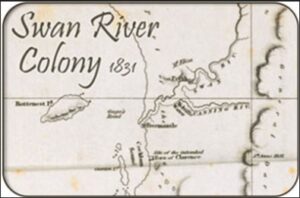
My next few blogs will relay some of those early descriptions, starting quite fittingly with Maggie’s letter to home describing her arrival at Fremantle and the sail up the Swan River, an amalgam of several letters from actual early explorers and settlers.
By way of a personal introduction to the series, I find it amazing that we are talking of events only 200 years old, a mere few generations. I look out over the bustling coastal community of Scarborough each morning as I drink my coffee, feeling blessed to live in this great land and humbled to realise that only 100 years ago the northernmost expanses of Perth were still over 10 kms away, back around Leederville. To put that in perspective, around the time my father was born there were no houses, no coastal skyrises and no morning traffic noise here in Scarborough at all!
WA has certainly grown and changed a lot in a short period of time; but one of the things that struck me as I researched was how little some things have changed. For example, I regularly kayak on our magnificent Swan River, and without fail I think of Maggie’s short description below, nearly 200 years old and yet strikingly familiar to all of us who now call Perth home:
“The town of Fremantle is situated behind a little promontory of limestone, at the mouth of a large estuary called Melville Water into which the Swan and Canning Rivers flow. These rivers allow inland navigation to a considerable distance, but the opening of Melville Water into the sea is so choked with rocks that it is only passable for boats in fine weather. Our boat therefore disembarked at a jetty in a small bay to the south of the town.
We proceeded to Perth in a passage boat which reached that place in about two hours thanks to a fine sea breeze. The sail up Melville Water was very pleasant, with a cooling breeze at our backs, the weather being hot. This estuary widens in many places into large bays. The limestone hills on its margin are covered with trees and scrub and are broken here and there into picturesque cliffs. There are several shoals one must be careful to avoid as navigation markers are yet to be installed, though in most places the water is both deep and wide.
Numerous schools of fish were sporting in the sunshine, and multitudes of jellyfish of great beauty were floating just beneath the surface of the water.”